
9,194 results
Capex Mn AED
Job Creation
Developments in Qatar
Stay informed about the most recent developments in Qatar, covering laws and regulations updates, new services and the influential factors shaping Qatar's flourishing business environment.
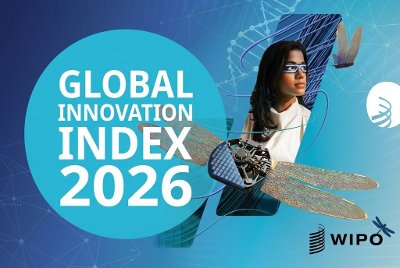
Qatar Ranks First Globally and Regionally in General Infrastructure and Tertiary Inbound Mobility for 2026
Qatar has ranked first globally and regionally in the General Infrastructure and Tertiary Inbound Mobility indicators in the Global Innovation Index 2026, published by the World Intellectual Property Organization (WIPO). The results showed Qatar advancing two places globally and ranking among the top three regionally in the Human Capital and Research pillar, as well as ranking among the top three regionally in both the Institutions and Infrastructure pillars.
MOJ Launches New Official Gazette Website and Al Meezan Portal to Strengthen National Digital Infrastructure
The Ministry of Justice (MOJ) has launched a new website for the Official Gazette and the Al Meezan Legal Portal. The Al Meezan Legal Portal brings together legislation, judicial rulings, legal opinions, and agreements in an integrated, encyclopedic framework, enabling users to move seamlessly from the text of the law to its context and practical application.
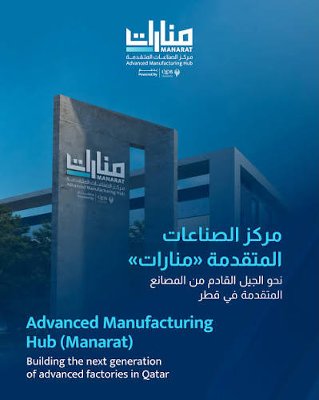
Manarat: Qatar's Gateway to Industry 4.0, Smart Manufacturing
The Advanced Manufacturing Hub (Manarat) was launched through a partnership between QDB, the Ministry of Commerce and Industry, and the Ministry of Finance's Center for the Fourth Industrial Revolution (C4IR), with applications now open for companies and manufacturers to join Manarat and occupy 16 ready-to-operate industrial units in the new industrial zone.
MOCI Enables Fee Payments via Apple Pay, Google Pay
The Ministry of Commerce and Industry (MOCI) has announced that Apple Pay and Google Pay are now available as payment options for fees associated with its services through all its online platforms and mobile applications.
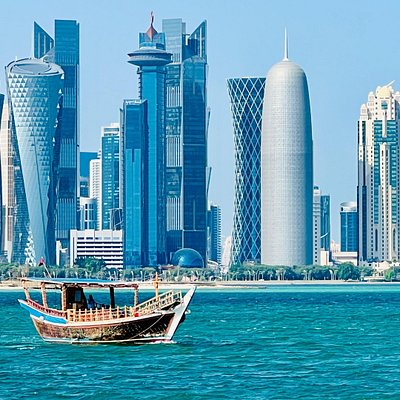
Qatar Advances 10 Places Globally in 2026 Travel and Tourism Development Index
Qatar has advanced 10 places globally in the 2026 Travel and Tourism Development Index, issued by the World Economic Forum (WEF), reflecting the country's growing competitiveness in the travel and tourism sector and strengthening its position at both the regional and global levels.

DDD Launches Azal Programme for Smart City and Sustainability Solutions
Doha Design District (DDD), powered by Msheireb Properties, has launched Azal, an innovation programme and open call inviting start-ups, entrepreneurs, companies, universities, research teams, creatives and practitioners to present ready or near-ready solutions to real urban, environmental, economic and social challenges within Msheireb Downtown Doha.
Data Dictionary
Sector The Sector indicates what is being provided at the site of the project. This is unique to each project and while it is guided by the company involved, a company may have projects in multiple sectors.
Subsector Subsector is defined as a more specific area within a sector in which the FDI project is involved. i.e. a project may be classified as the Video Games subsector within the Software & IT Services sector.
Business Activity Describes the business activity conducted at the project, such as manufacturing, sales, extraction, construction, or R&D.
Tag Tags enable users to refine searches with additional technological and political criteria of interest, not fully covered by standard classifications. Examples range from business areas like Blockchain to current events such as Coronavirus.
Technology Level Projects are classified by Technology Level, based on definitions from the OECD, EU, and BEA:
High Tech: Significant R&D investment, cutting-edge technologies, high innovation, often involving advanced manufacturing, biotechnology, aerospace, and IT. Typically involves a high proportion of skilled labour.
Medium Tech: Combines advanced and traditional manufacturing, with moderate R&D and technology integration. Common in automotive, chemical, and machinery industries.
Low Tech: Minimal R&D, reliance on established processes, typically in labour-intensive sectors like textiles, food processing, and basic metal production.
Project Type
Greenfield (wholly-owned): A new physical project creating new jobs and investment, potentially in a new location within the country.
Reinvestment: Extension of an existing operation, adding jobs and/or investment, excluding share acquisition or new machinery installation.
Greenfield (joint-venture): A partnership where two or more companies create a new, independent business. Joint ventures are only included where they lead to a new physical presence.
New Forms of Investment (NFI): Non-equity modes where a domestic firm partners with a foreign company, involving strategic alliances, licensing, and joint ventures.
Mergers & Acquisitions (M&A): When a foreign company takes full ownership or merges with a local company through equity transfer, typically without new capital investment or job creation.
Region The source world region of a project, indicating where the ultimate parent company is headquartered.
Country The source country of a project, indicating where the ultimate parent company is headquartered.
Province Indicates the province/emirate/state where the project is located.
City Specifies the city where the project is situated.
Free zone A Free zone, or Special Economic Zone, is an area in a country that is subject to different economic regulations than other regions within the same country. The SEZ economic regulations tend to be conducive to - and attract - FDI. When a country or individual conducts business in an SEZ, there are typically additional economic advantages for them, including tax incentives and the opportunity to pay lower tariffs.
Capex Capital expenditure (capex) reflects the total investment from all involved parties. For phased investments, the initial amount is recorded.
Jobs Created This is the number of direct jobs generated by the investing company at the project site, excluding construction and supply chain jobs.
Data Sources Data is primarily gathered by fDi Markets from publicly available sources:
- Financial Times newswires and internal information
- Thousands of global media sources
- Over 2,000 industry organisations and investment promotion agencies
- Purchased data from market research firms
Each project is cross-referenced against multiple sources, with an emphasis on direct company data, including decision-making contacts. Financial Times Ltd is not responsible for the accuracy of this data.
Data Publication Data is collected in real time as announced by companies, undergoing rigorous quality control before monthly publication. Data is frequently revised as new information becomes available, including updates to jobs and investment figures.